How to Choose the Right Database? – MongoDB, Cassandra, MySQL, HBase

Choosing the right database for your application is no easy task.

You have a wide variety of options relational databases such as MySQL, or distributed NoSQL solutions such as MongoDB, Cassandra, and HBase. NoSQL has come to mean not only SQL as many distributed database systems do in fact support SQL-style queries, as long as you are not doing complex join operations and this further blurs the lines between these systems.

We will talk about how to analyze the requirements of your system in terms of consistency, availability, and partition-tolerance, and how to apply the CAP theorem to guide your choice after showing you where different database technologies fall on the sides of the CAP triangle. We will also talk about more practical considerations, such as your budget, need for professional support, and the ease of integration into the other systems already in place in your organization. Maybe you don’t even need a distributed storage solution at all! Choosing the right technology for your data storage will save you a lot of pain as your application grows and evolves and making the wrong choice can lead to all sorts of maintenance problems and wasted work.

Your instructor is Frank Kane of Sundog Education, bringing nine years of experience as a senior engineer and senior manager at Amazon.com and IMDb.com, where his job involved extracting meaning from their massive data sets, and processing that data in a highly distributed manner.

Explore the full course on Udemy

Kafka Tutorial for Beginners

Learn to stream big data with Kafka, starting from scratch.

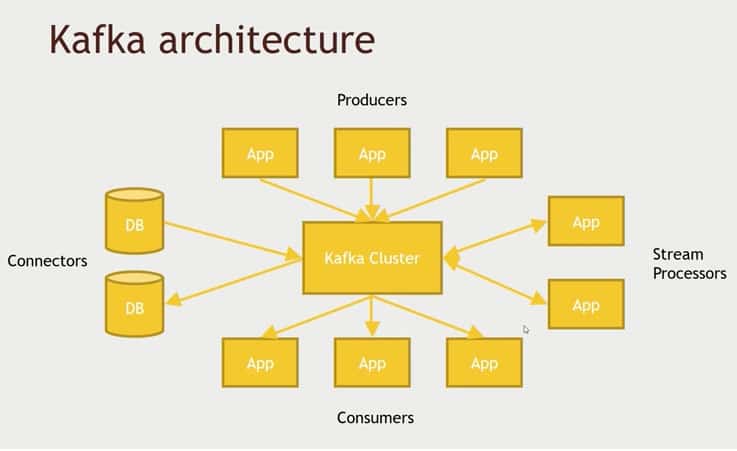
Kafka is a powerful data streaming technology and a very hot technical skill to have right now. With Kafka, you can publish streams of data from web logs, sensors, or whatever else you can imagine to systems that manipulate, analyze, and store that data all in real time. Kafka bring a reliable publish / subscribe mechanism that is resilient and can allow clients to pick up where they left off in the event of an outage.

In this tutorial, you will set up a free Hortonworks sandbox environment within a virtual Linux machine running right on your own desktop PC, learn about how data streaming and Kafka work, set up Kafka, and use it to publish real web logs on a Kafka topic and receive them in real time. Kafka is sometimes billed as a Hadoop killer due to its power, but really it is an integral piece of the larger Hadoop ecosystem that has emerged.

Your instructor is Frank Kane of Sundog Education, bringing nine years of experience as a senior engineer and senior manager at Amazon.com and IMDb.com, where his job involved extracting meaning from their massive data sets, and processing that data in a highly distributed manner.

Explore the full course on Udemy

Learn Elasticsearch 6 and the Elastic Stack

“Elasticsearch 6 and Elastic Stack: In-Depth and Hands-On!” is here! This comprehensive online course covers using Elasticsearch, Logstash, Beats, Kibana, and X-Pack with lots of hands-on examples and exercises, including importing data into Elasticsearch in many different ways. Enroll now to learn these very hot and very valuable skills. (Also available: Elasticsearch 5) Get Course

Taming Big Data with MapReduce and Hadoop – Hands On!

Learn the technology that started it all – MapReduce! MapReduce is at the heart of Hadoop, and offers a programming model for processing massive data sets on a cluster in the cloud. Get hands-on with lots of examples using the Python programming language, ranging from simple tasks all the way to anlayzing social networks and making movie recommendations with real data sets.

Get Course